About a Photograph: Gradualism
On Saturday May 30 I went out to take some photographs of the Mackenzie River. The weather was ideal that evening in many ways, as it was very warm and there were no bugs out to cause physical or mental discomfort. However, I knew there was one central issue to my goals, which was that the sky was completely cloudless, presenting a radiant flat blue gradient as far as the eye could see.
It may surprise one to read this, but photographers typically hate a blue sky with no clouds. This is because, when you compose a photo, you tend to need every element to be doing something in the way of being a character, keeping the viewer’s eye contained within the frame, telling a story. When you are given a blue sky with not even a wispy little cloud, you present minimal information to keep the viewer wondering. Looking at a photo of some trees and a pretty blue sky, your eye starts at the trees and then travels up, up, up into the firmament, never to return to the scene the photographer worked so hard to present. This is the issue I knew I faced when I set out that evening, but I wanted to get outside for a walk. So, as so many people before me have done when faced with an obstacle they know they cannot overcome, I said: “to hell with it”.
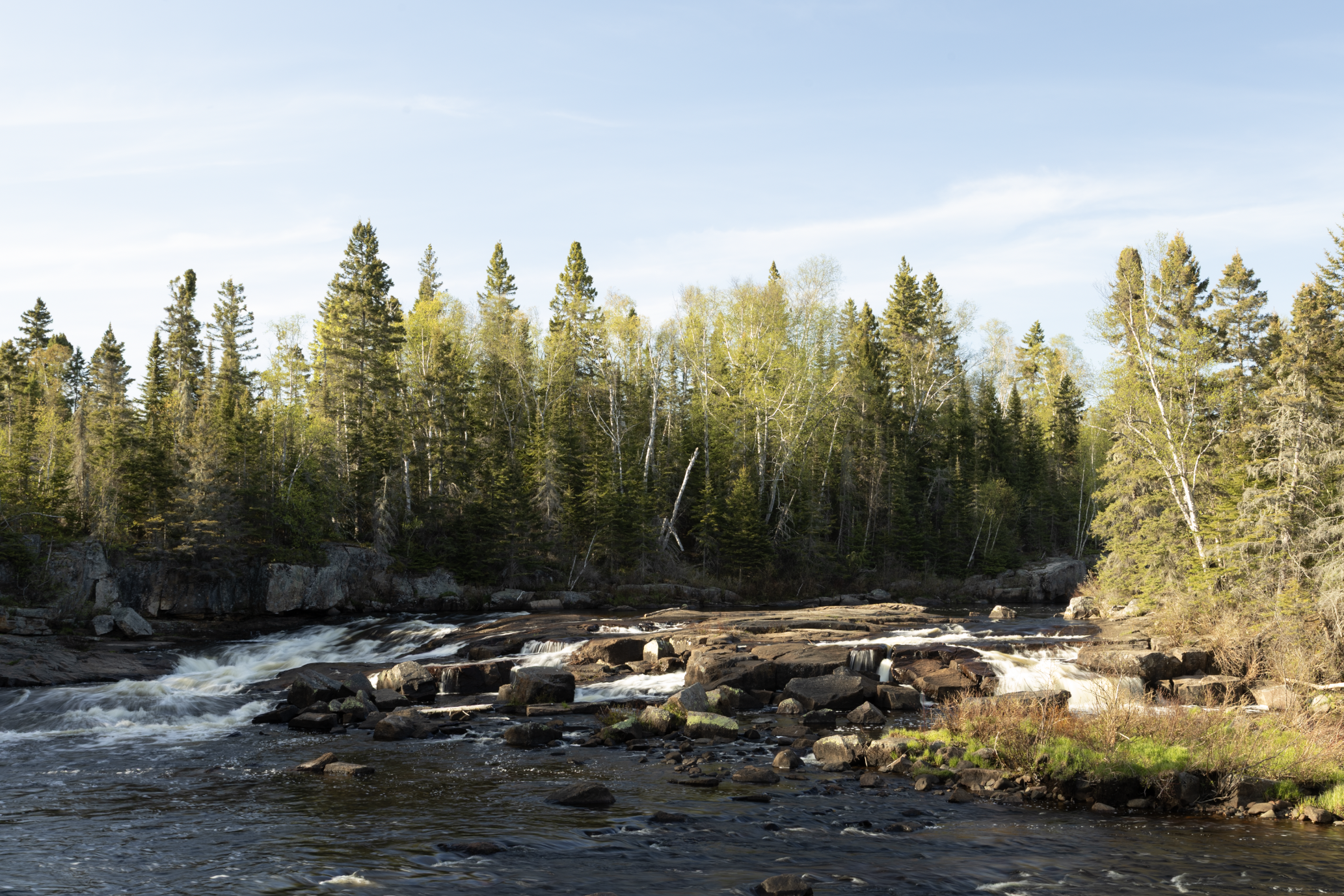
The Mackenzie River, May 30, 2026
By the time I arrived at the mouth of the river, I was fortunately greeted by a couple of small clouds one can see in the picture above. However, these clouds were not very dramatic, so they did not give the sky much character, especially not enough to balance out the rushing water in the bottom of the frame. So I decided to focus my outing on the intimate landscape and attempt to show relationships between the elements rather than the grandeur of the whole river. I began by walking up and down the river along the rocky shore, just looking around with my camera still in my bag. Once I set up at a nice base camp, I took a few exposures of the river, trying to communicate the raw power flowing into Lake Superior, as when you are up close it is quite dramatic. But, as is the problem with many concepts for a photograph, what I see with my eyes sometimes cannot be captured with a camera’s sensor in a still image. When you take a picture of white rapids rushing down into a lake you can perceive the motion of the water, but communicating power is a different task entirely. Just when I was getting frustrated taking pictures of water I moved upriver and noticed a striking scene.
On the right riverbank there was a hanging cliff, covered in lichen and various vegetation on top. Under the cliff, wedged perfectly, was a round boulder, around which the river flowed.
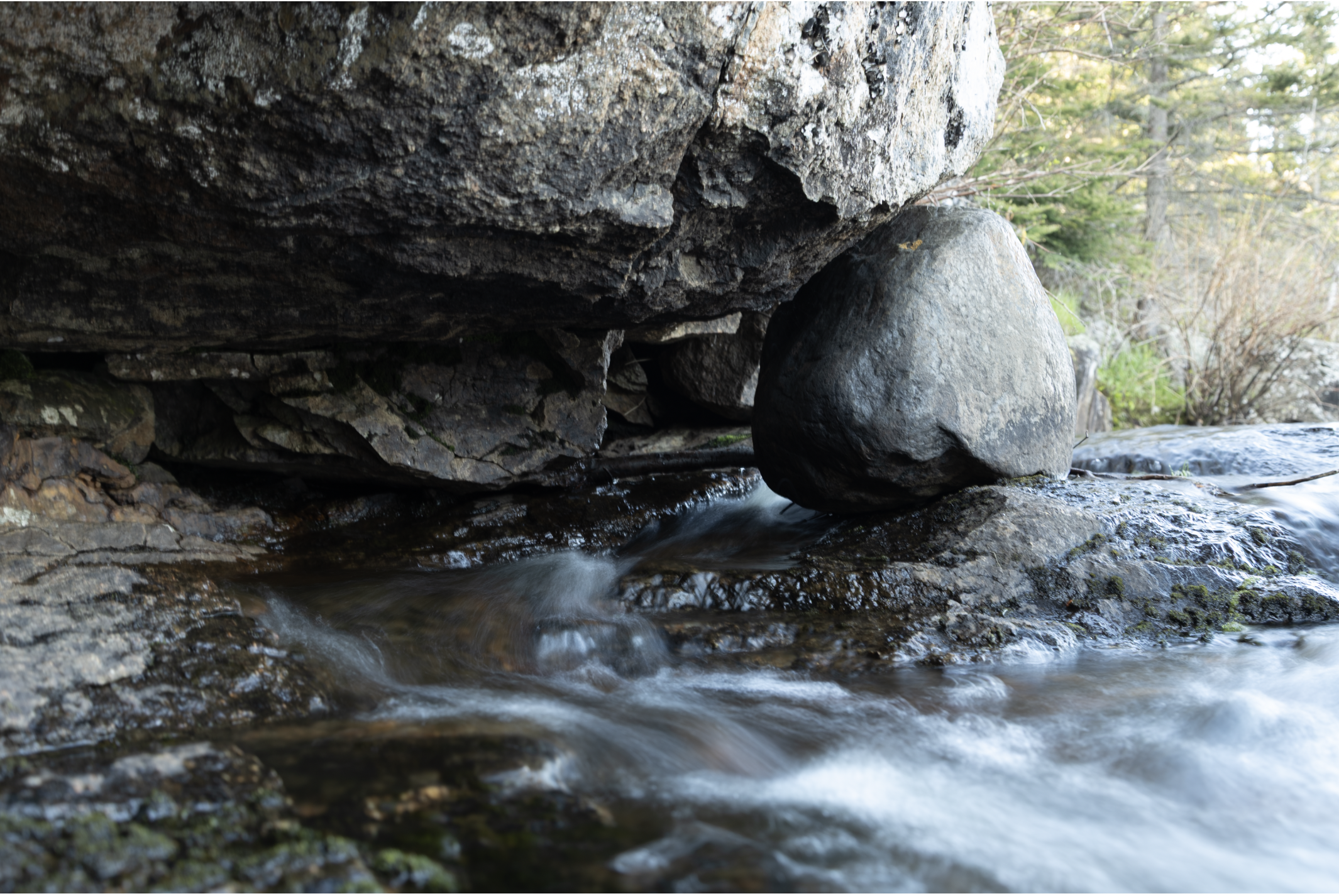
A rock in a hard place
Seeing this scene I decided to approach photographing the river in a different way. The goal of capturing the power of the river was the same. However, instead of photographing the brute strength of the water, I wanted to make an image that showed the patience of the stream as it has slowly eaten away at the rock over eons.
First, I had to decide on the geometry of the frame, representing the three main characters: the cliff, the boulder, and the river.
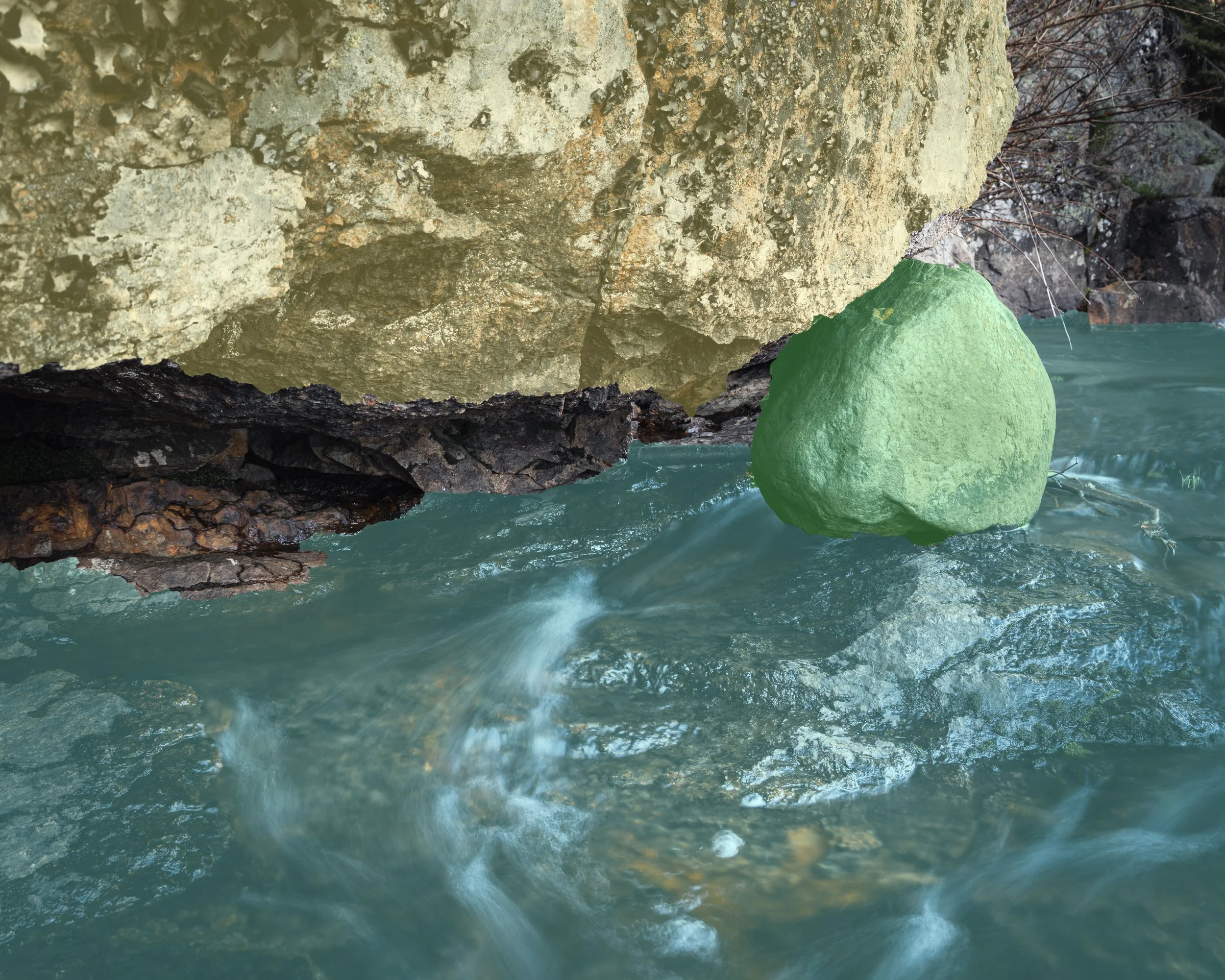
Here I have illustrated the main elements of the scene, with the cliff being yellow, the boulder being green, and the water being blue.
I decided to represent the boulder as the central character of the composition, as the rounded figure wedged between two forces had an inherent narrative. I then placed the boulder on the rightmost third of the frame. This gives it presence and lets the eye find it naturally and then rest. The next decision was how best to show the cliff and the river. After much trial and error I decided on representing them almost equally, diagonally on the top and bottom of the frame. Using a slower shutter speed of one full second I show the water passing around and under the boulder gradually, as it slowly eats it.
Once the file was brought into Lightroom, I needed to decide on a colour palette. I chose to lean into the natural tones of the rock, which were bluish grey, brown, rustic orange, and a bit of a cool purple. I did some dodging and burning to bring the central figures into focus, and then I was done.
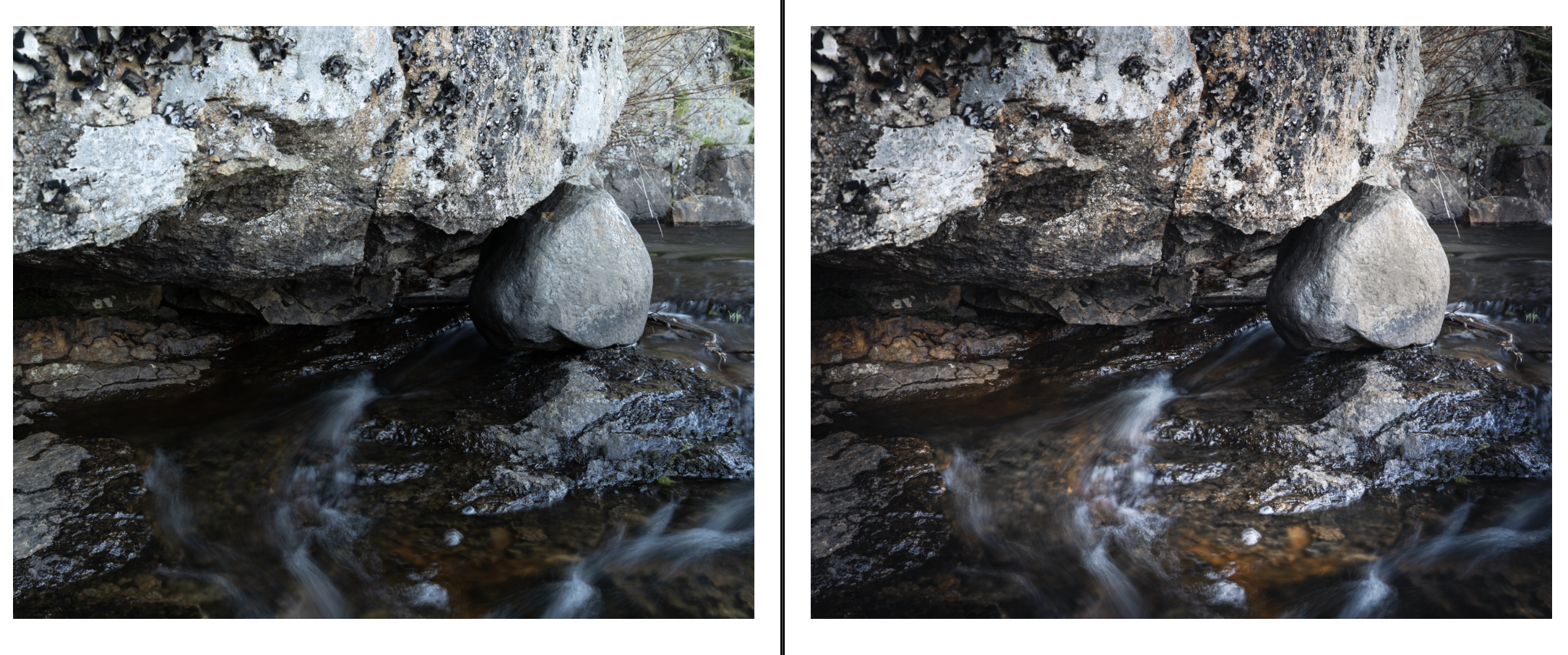
Left: the image straight out of camera with no edits. Right: the final image with colour correction applied.
The final image I believe succeeds in showcasing the real power of a river and how it affects a landscape. This boulder was at one time tumbling in the river before being wedged under the cliff seeking refuge. The cliff now seems to rest on the boulder, relying on its support lest the whole thing fall into the water. However, the river has not given up yet, it has all the time in the world. So, settling into a soft trickle, it slowly eats the boulder until one day it will carry it away into its depths where it will eventually be pulverized.
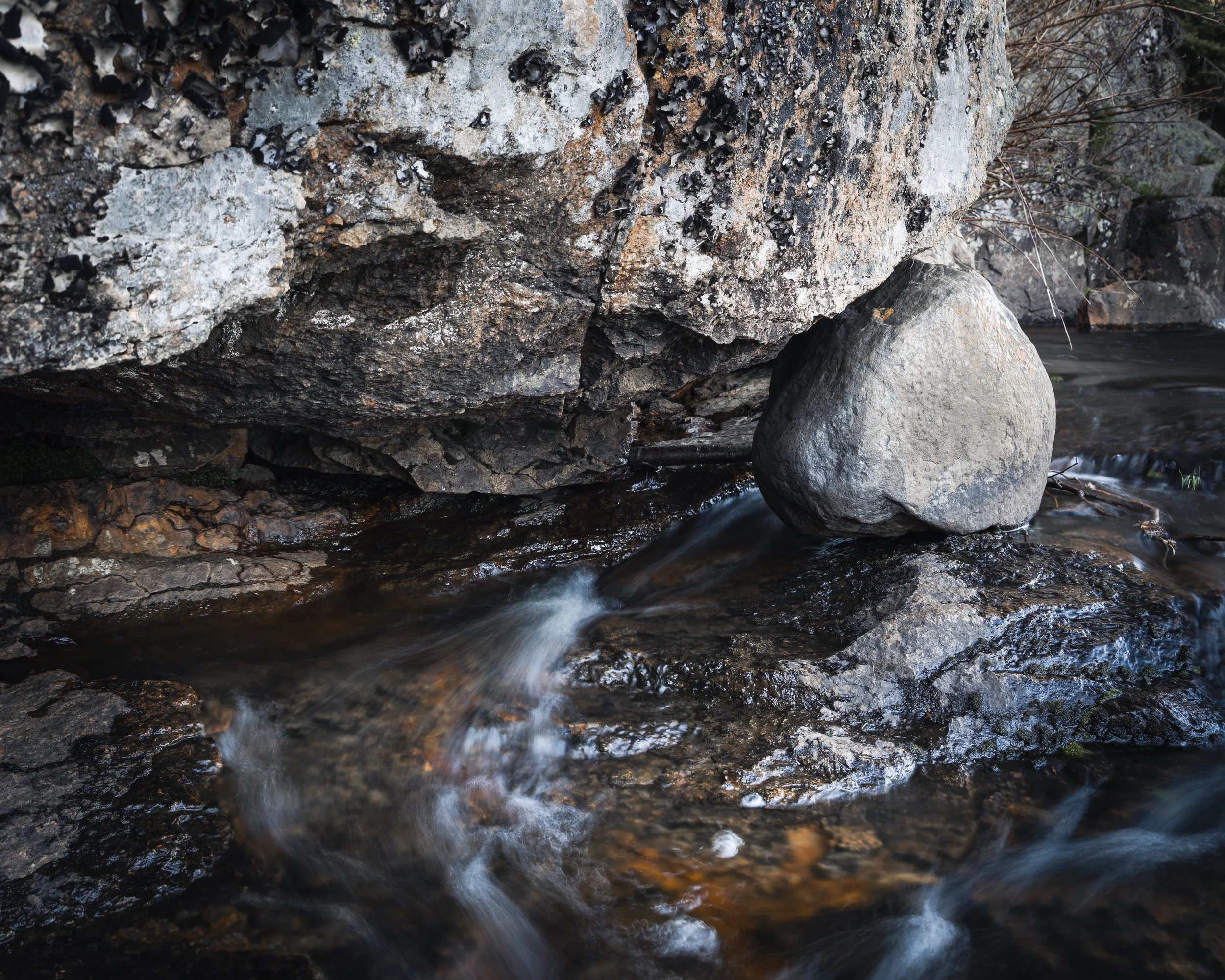
Gradualism (2026)
You can buy a print of Gradualism in the print shop: