On Printing: The Last Step in Photography
The invention of the LED screen has made it so that most of us neglect to print our photos anymore. There’s nothing wrong with viewing posting a photograph to Instagram as the last step of a photograph’s life. When you press that share button and get a little spike of dopamine as your phone notifies you that your post was successfully shared, and your photos are now being perceived by family, friends, and anyone else on the World Wide Web, it makes sense to think, “Job well done.” However, in this new economy of images, we still need to consider the joy of printing for printing’s sake as a viable way to share, view, and own our photographs. Consider this anecdote. The walls of my parents’ house are littered with framed prints (some of which are mine) of everything from family vacations to art prints of local and famous paintings. None of these are new to me at all. In fact, I walk past these photos often, never glancing at them because they are commonplace. However, sometimes I stop and look at one for a few minutes. I think about it for a while, consider the moment in time represented or any other details that come to mind, and then I go on my merry way. The weird thing is that sometimes I do this with the same photo multiple times. Maybe a beam of early morning light is coming in from a window, lighting up one wall in a new way. Maybe I recently thought of a memory that’s photographed and hanging on the wall. The commonality of the photographic print, and the art one owns at home, is what makes the experience wonderful. If you feel nostalgic or inspired and have to pull out a device to chase this feeling, the mere action may dispel some of the magic of stumbling upon a new perspective. When you display something in your home, it kind of just waits for you to look at it.
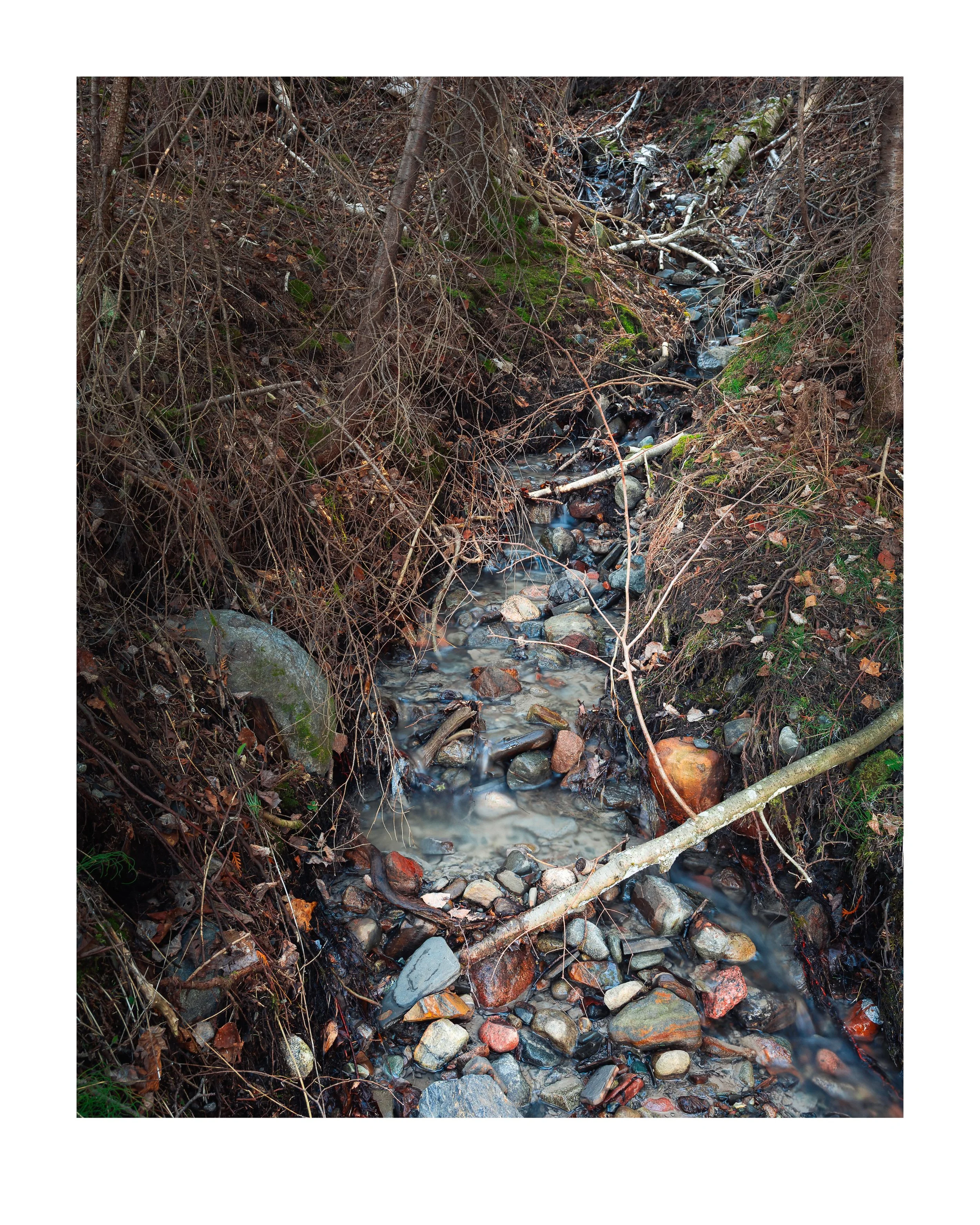
Perpetual (2026) — This image has a fun play of textures and colours, with a nice curve in the stream that holds the eye. This photo could hold its own printed large above a bed or couch, where it will frequently be viewed and new details discovered.
Anyway, this pretentious rambling is not to be confused with a rant against phones. We all know the positives and negatives of such devices. What it is supposed to do is convince you to put some things on your walls and express yourself with physical media (better still if the art is mine). Recently, I have been delving deep into how one makes a fine art print and where the extra value comes from. First, one must consider the photograph being displayed. The colours, textures, and tonality in a photograph will interact with the surrounding furniture and available light, so some pictures make better display pieces than others.
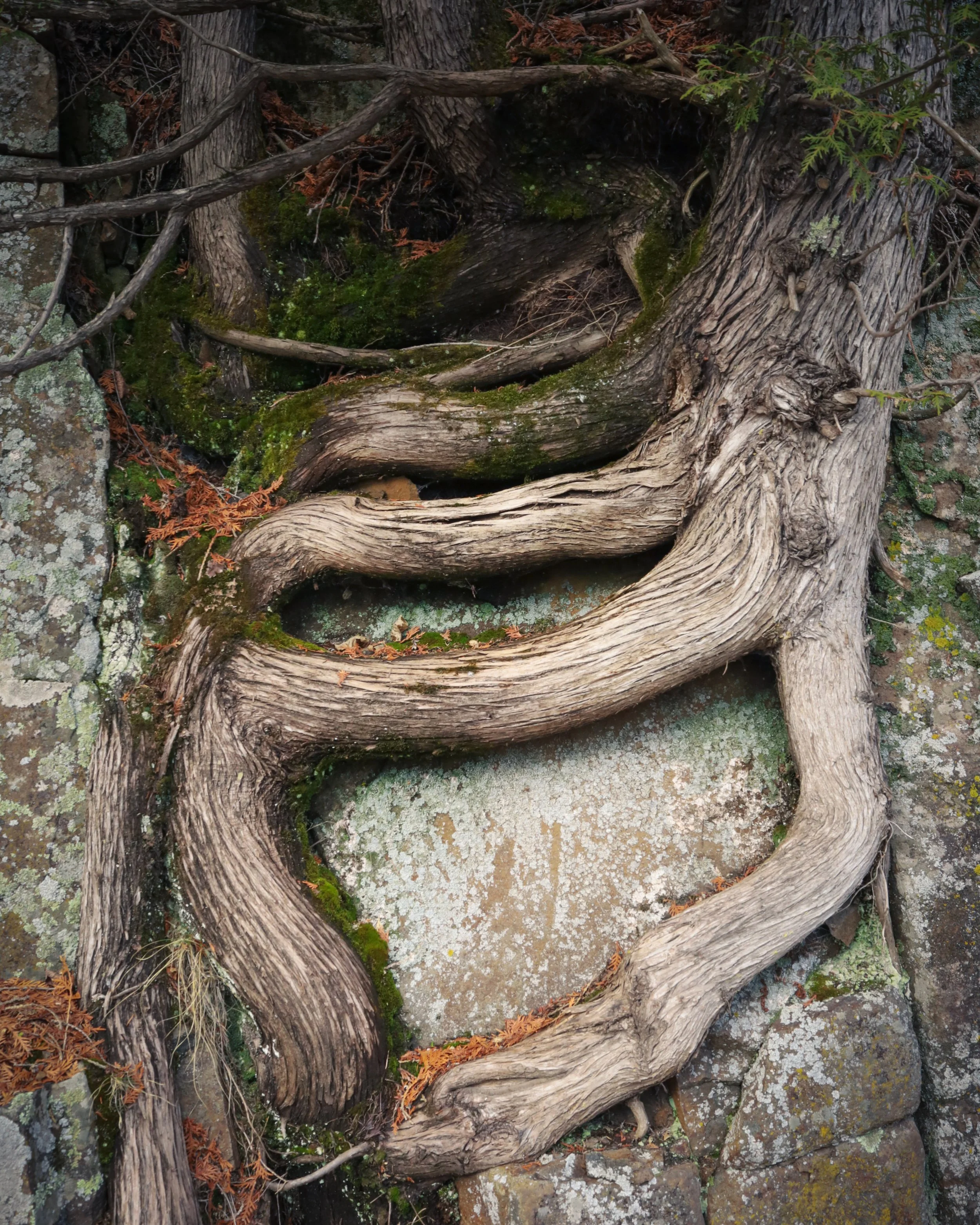
Sinuous (2026) — As a print, this image invites prolonged viewing, with the textures of the roots and rock revealing themselves over time.
Furthermore, the paper one prints on is a huge factor in how the print is perceived. Personally, when I see a small, traditionally glossy print of a photograph, I think of a one-hour photo shop making poor enlargements of 35mm film on a late Tuesday afternoon, or (strangely) I think of a manila envelope filled with glossy images in a smoky detective’s office as the private investigator shuffles through the photographs looking for clues à la classic film noir. It goes without saying that these are not the comparisons I want made to my quiet studies of Canadian nature, so I needed to find a paper that suited me. Enter Hahnemühle Torchon fine art paper. With its wonderful cotton rag weight and texture, this paper presents the photograph with the presence of a painting more so than a Sears catalogue. While more expensive than some other papers, I feel that the quality of the texture, colours, and archival capabilities provides immense value for those who buy a print from me.
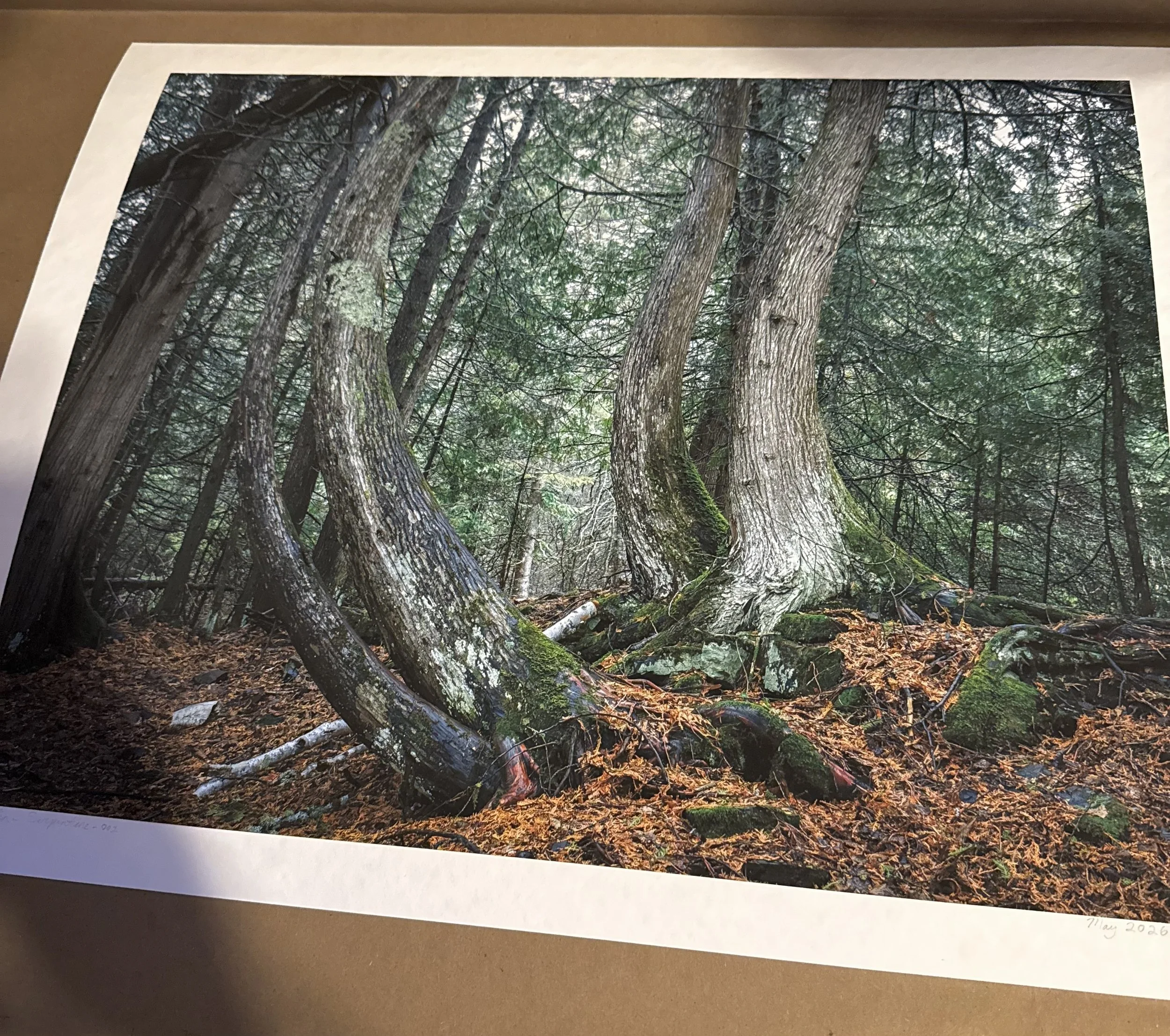
This is a crude photo I took on my iPhone after I picked up a 16×20 print of Serpentine from the print shop. This paper has been described as having a terry cloth-like texture that brings detail out of the photo without entering the gimmicky realm that can happen when the medium overwhelms the image (like a cheap canvas print, for example).
Overall, it’s safe to say the printing bug has bitten me, especially recently. In times long past, you couldn’t see an image unless someone got into the darkroom and spent hours mastering a print for display. While we now look at printing as a luxury for the most part, I think my process will involve printing in a much more front-and-centre role within my photography projects. As Ansel Adams once said, “The negative is the score; the print is the performance.”
Those interested in looking at my available print offerings can see the print shop here: