Woodland Photography
Something that’s always interested me over the years is woodland photography. I was first introduced to fine art photography through street photography, where the primary way one spends time is walking around a city or town, searching for interesting people and scenes, trying to bring some sense of geometry to chaotic and seemingly boring environments. Landscape photography, on the other hand, is something that I never really latched onto. When someone asks you to think of a landscape photograph, you will no doubt imagine a wide vista. Maybe a mountain is the subject, there’s a little lake, and the sun is just about to set behind our mountain, setting the sky afire with brilliant hues of pink, orange, and yellow. This is all wonderful, and I like a vista as much as the next person and have photographed my fair share of them, but they don’t make me excited enough to get them printed off (usually). I think this is because a scenic (maybe even famous view) brings with it all sorts of baggage. When stopped at a famous spot, you can bet someone has also come and taken a photo, probably earlier that day, and probably done a better job than I can representing the full scope of the scene. This brings me to the woodland.
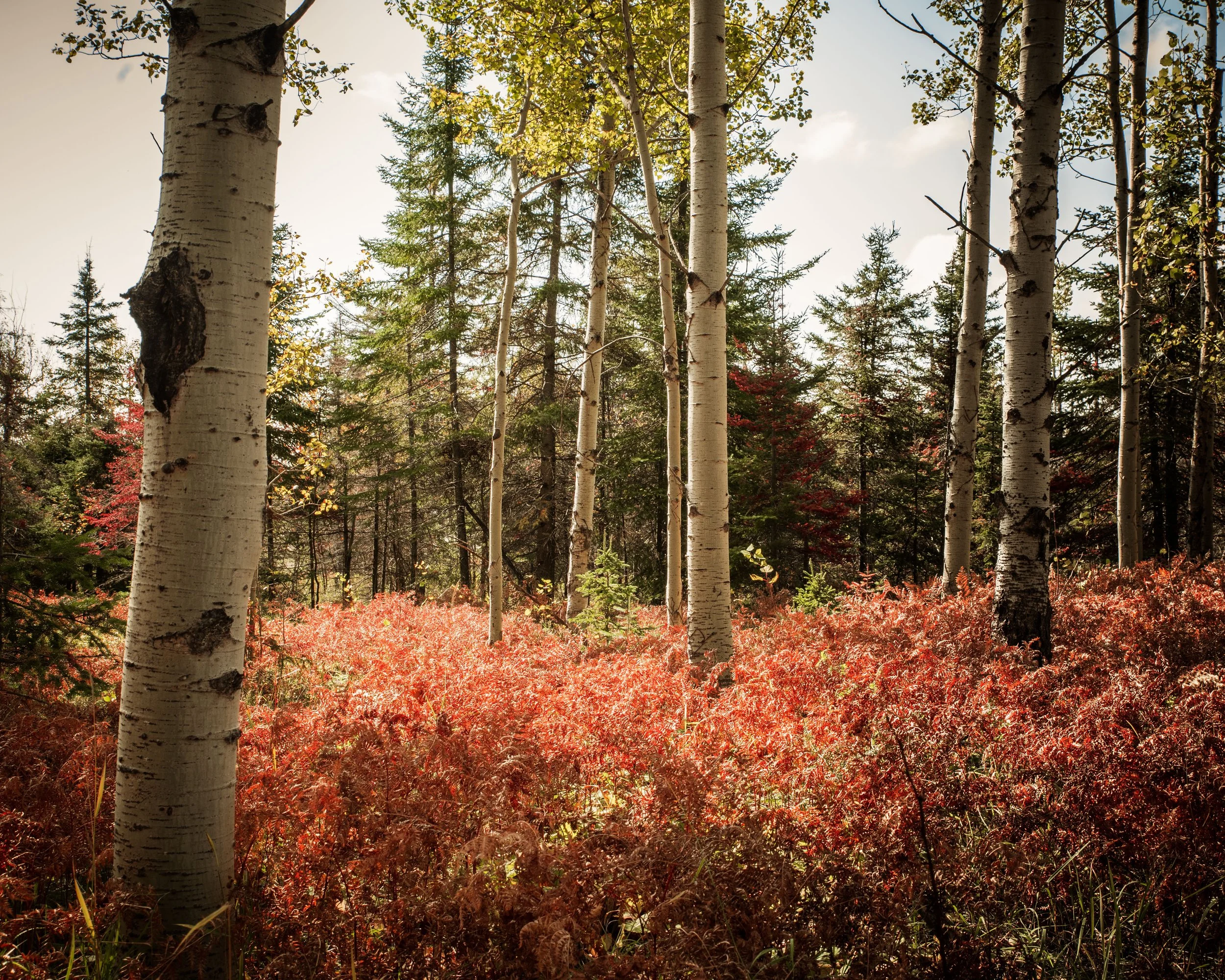
Photographed in 2023 - a stand of birch resting in an ocean of ferns that turned a brilliant red with the approach of fall.
The opposite of a vista, when you enter a woodland, you often feel enclosed by the trees and surrounding foliage. Sometimes the trees look so old they have a certain gravity to them, while other times you find a scene full of young trees that are all competing for what precious sunlight they can find. Last week, while going for a walk with my fiancée Allison and my beagle Winston, Allison said to me, “I think you like taking pictures in the woods because it’s like street photography.” This observation of hers is something I have thought about much over the last few days. When one considers it for a moment, the similarities are there, to be sure. Both in a woodland and on the street, you are sifting through thousands of little interactions, trying to make something from nothing. Similarly, in the woods, you have thousands upon thousands of species of flora all interacting with each other. Be it photographing someone on the street or an ancient tree basking in the last light of day, the problem is always one of framing the subject in an unchangeable environment, using geometry and light to make something that communicates an idea.
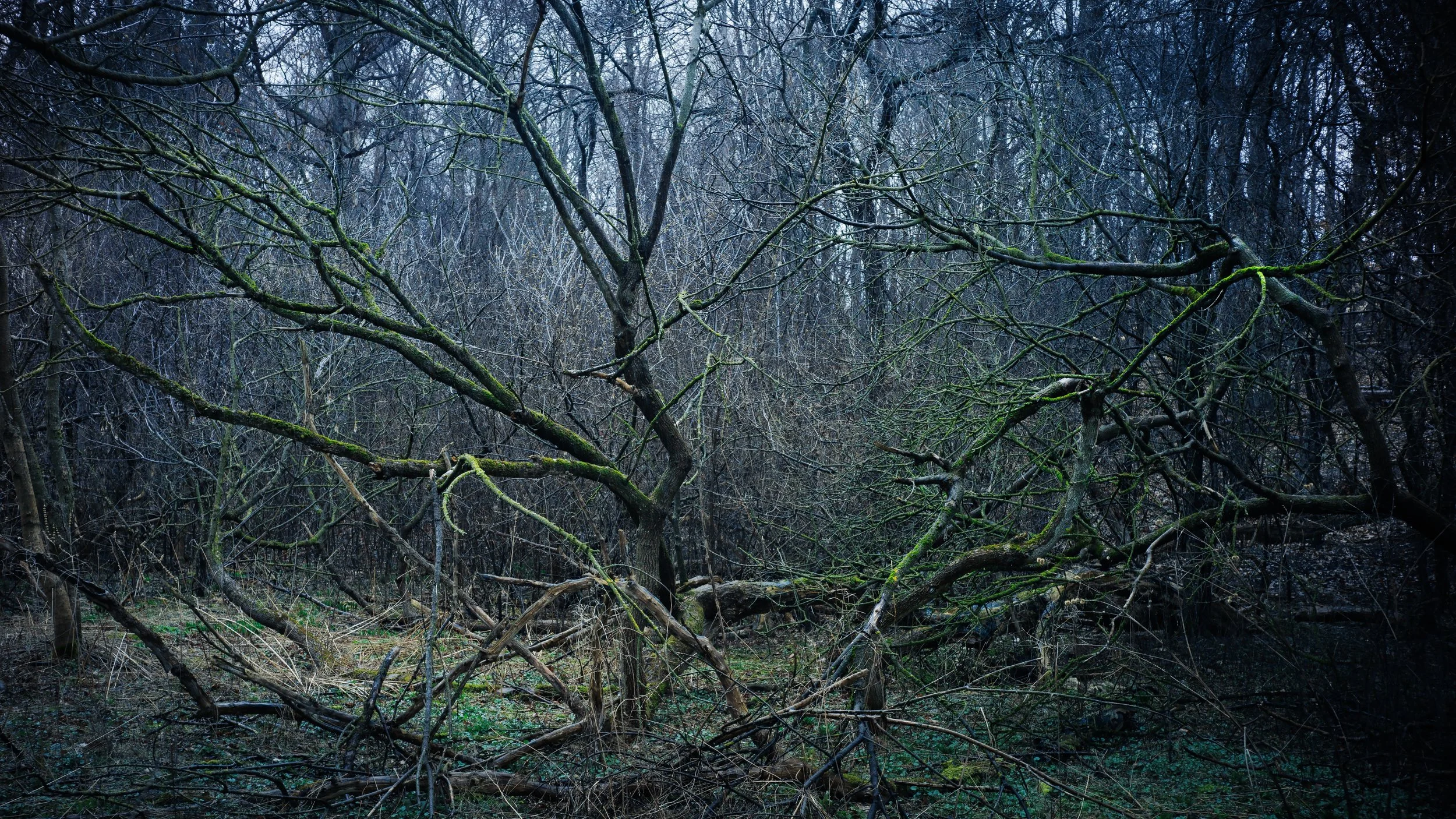
Here is a scene that is very chaotic. However, through the use of framing and colour the tree on the lefthand side anchors the scene. The moss on the branches and the tangle of the broken branches and young saplings tell a dramatic, violent story of trees growing in a wood frequented by storms.
Photographing a woodland scene is also enticing, as it feels unique and special. If I walk thirty feet into the woods off a trail, the odds of me finding the same thing interesting as you are pretty low. Also, taking into account how fast light changes and where it falls in the woods, you’d be hard-pressed to capture the same feeling at the same spot two days in a row. See below a shot of an old tree by the side of a stream.
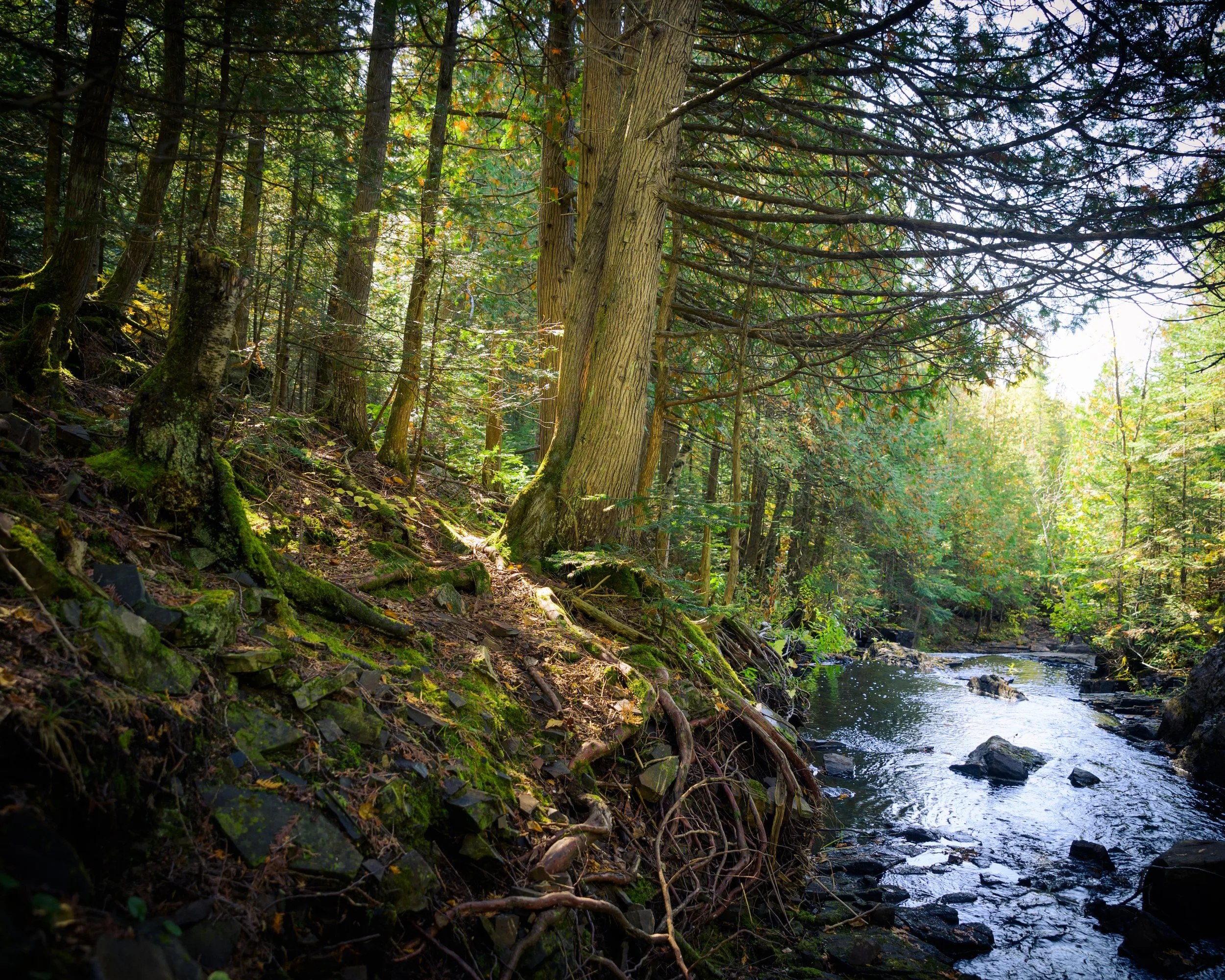
Here, we have a mid-summer scene where the light is coming from behind our main tree to emphasize a peaceful mood. Here, everything looks awake. Life is happening, the stream is moving into the horizon, ushering us forward.
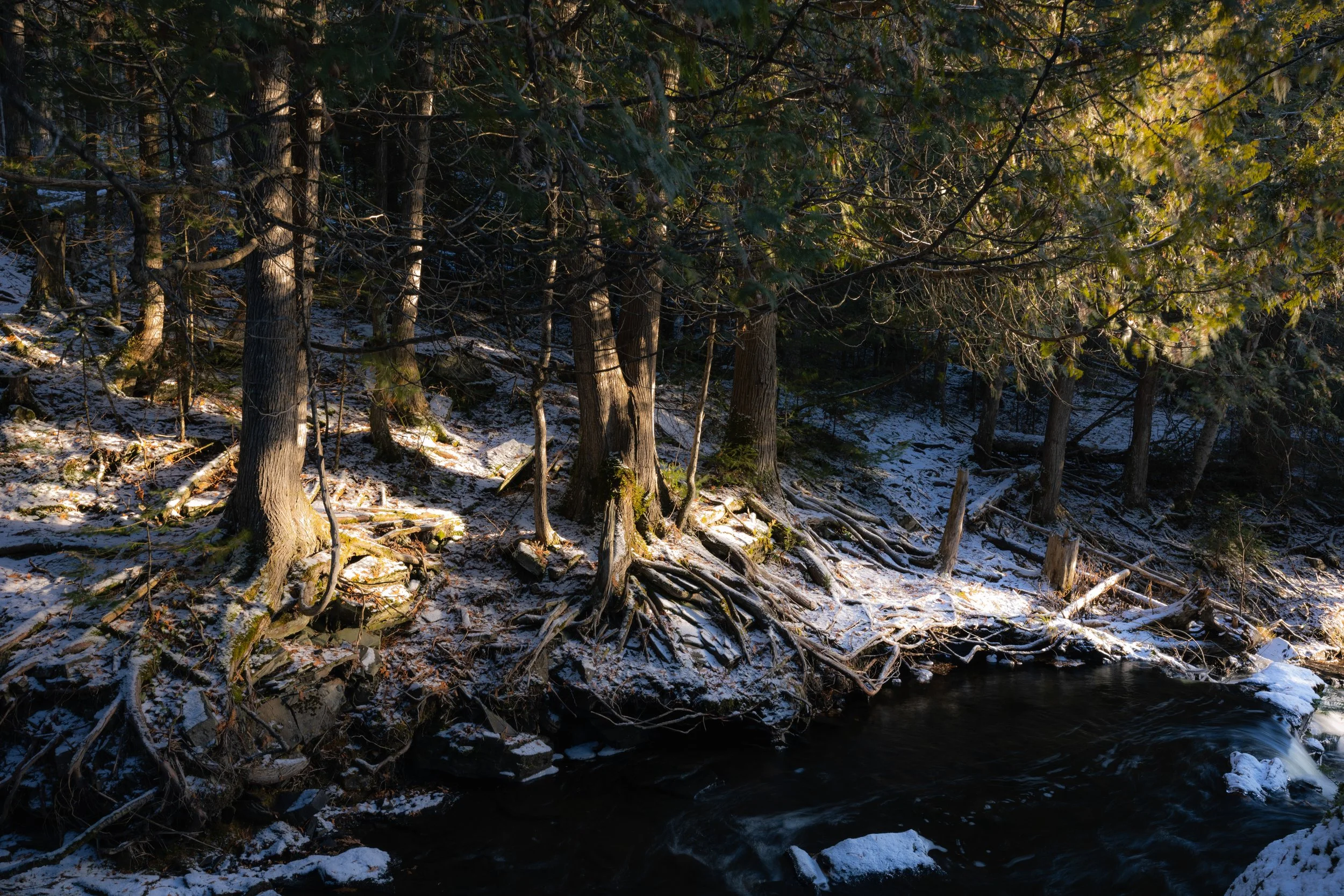
Presenting the exact same area, with the same trees and stream, you get a different sense and emotion in this photograph. Now we are in early winter. The light seems to be waking up trees that would rather be asleep. The stream is darker, the rocks dusted in snow. The light and season the photo was taken in make the picture seem as if it takes place in a completely different area.
The amount of variance a woodland scene can present in shape, texture, light, and colours really gives you a lot of room to play around. It’s less about setting up and waiting than walking around and seeing something you find interesting. Similar to a street photograph, where the same city block can present a seemingly infinite amount of possibilities depending on who, what, where, when, and why. The five W’s are just as meaningful to a tree as to a person.
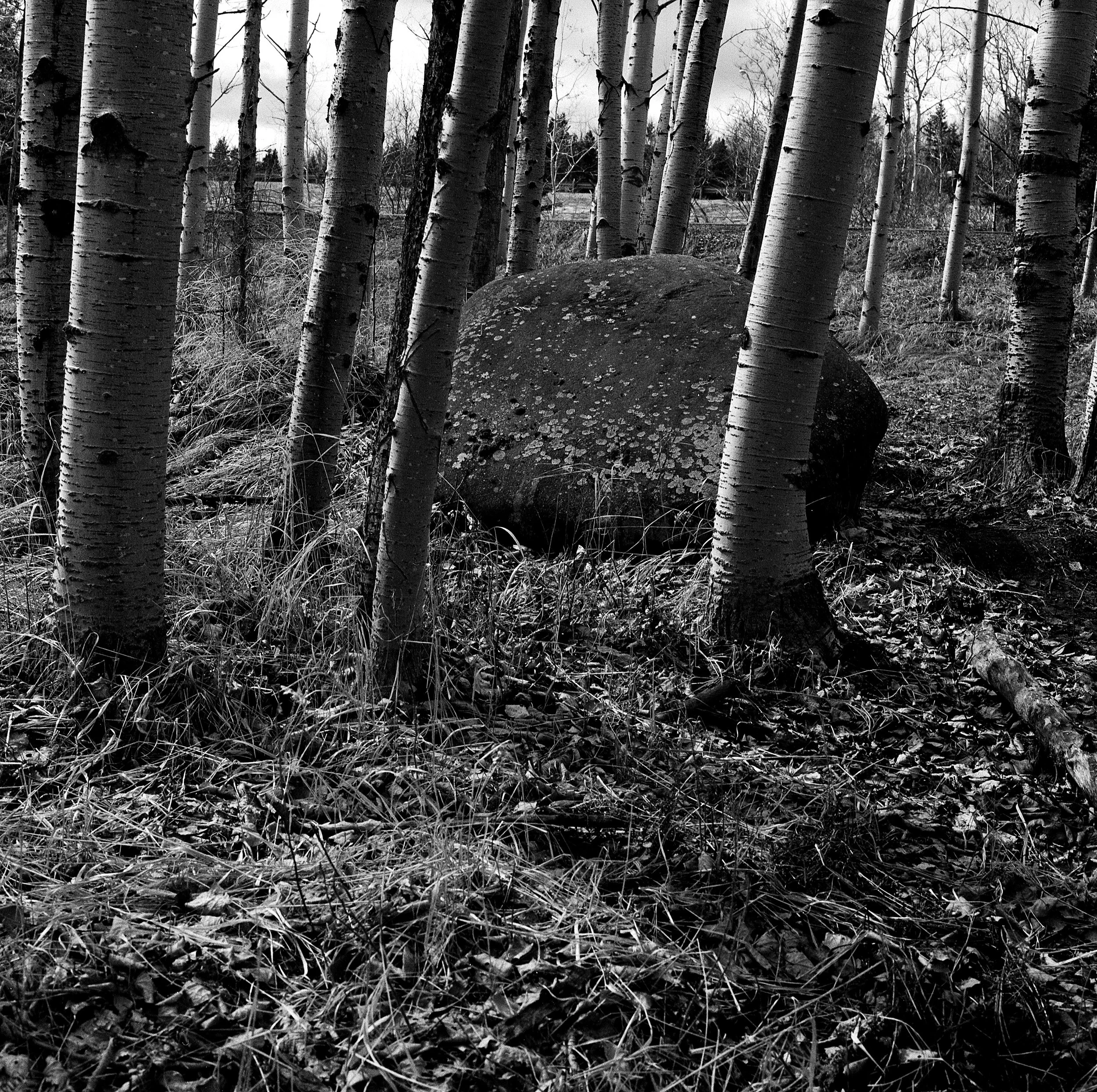
It’s not just about trees either. In the woods, you can find all types of subjects. Here you see a rock that has seemingly been here since time immemorial, guarded by a stand of birch trees. The sun to the left of the subjects gives the scene contrast and a bit of mystery.
In summary, I find woodland photography a dynamic and interesting genre with limitless possibility to communicate emotions. Out in the woods, you will find trees much older than anyone currently alive, rocks older than time, and textures of sunlight that give it all a dimension that may surprise you. The challenge of composing and editing an image that is an accurate representation of what you saw and felt really makes every scene a problem to solve, and the feeling of finally getting a final image you are proud of is as addictive as anything.
You can see more of my woodland and landscape photographs here